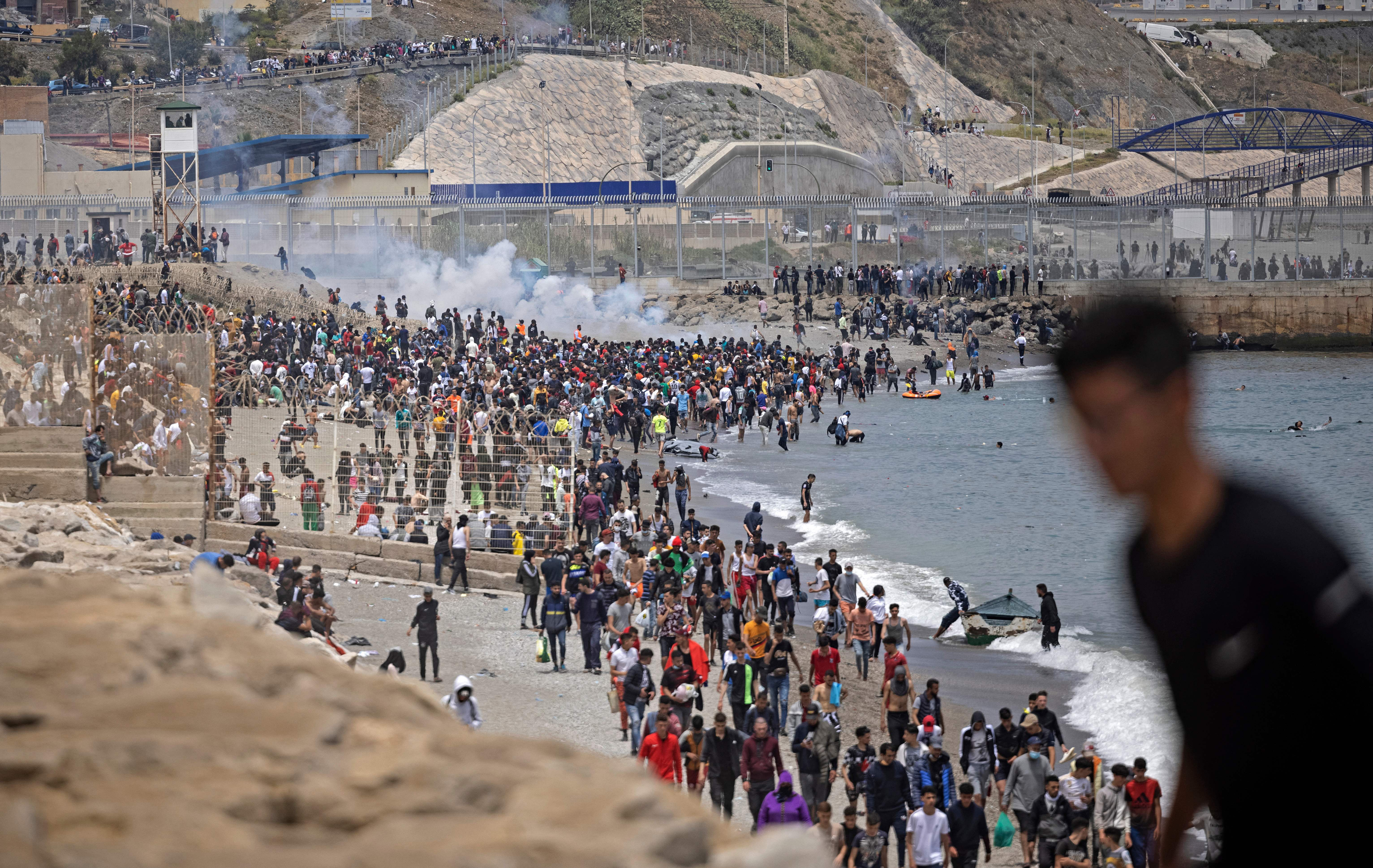
The crisis gained momentum following a Spanish Supreme Court ruling regarding border pushbacks. While the court held that migrants intercepted at sea could not be immediately expelled, the nuance was lost in digital translation. Misinterpretations spread rapidly across platforms like Meta, claiming that any arrival in Ceuta guaranteed residency. These rumors were bolstered by viral clips, including footage from local outlet El Faro de Ceuta, which intended to document the strain on the city but instead served as a beacon for those seeking entry.
Influencers and social media users amplified the trend, posting videos of themselves swimming toward the coast. Mounim Belhaj, an Instagram personality with 31,000 followers, cited reports of humane treatment at reception centers as his primary motivation. Behind the scenes, coordinated WhatsApp groups provided tactical advice on routes, urging members to act before a supposed deadline. By the time the surge peaked, authorities reported 70,000 irregular entries, though the reality of the enclave—marked by hunger and limited resources—quickly forced many to retreat. Thousands of sub-Saharan Africans and minors remain stranded, caught in the wake of a digital campaign that bore little resemblance to the legal or physical reality on the ground.




Comments (0)
No comments yet. Be the first!