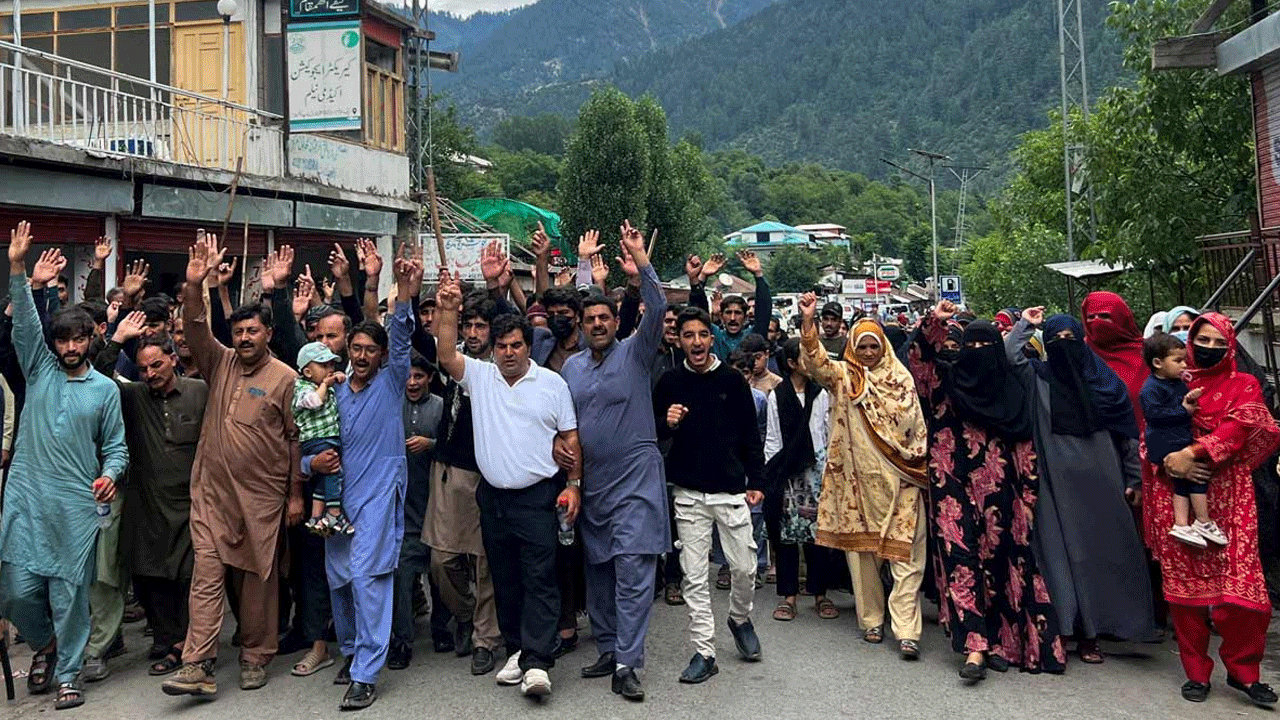
Kumar characterized the current situation as a grave escalation, pointing to televised footage showing severe violence against civilians. He criticized the international community, including the United Nations and European powers, for applying inconsistent standards when addressing human rights concerns in Kashmir. While noting that UN Human Rights Chief Volker Turk has acknowledged the violations, the former diplomat argued that verbal condemnation is insufficient without concrete sanctions.
The unrest in PoJK has drawn attention from the Kashmiri diaspora in the United States, who are actively lobbying the White House for intervention. Kumar emphasized that the global community must be as vocal about Pakistan's actions as it is regarding India, rejecting the current discrepancy in diplomatic scrutiny.
Beyond the immediate crisis in PoJK, Kumar highlighted the failure of Pakistan’s regional strategy regarding Afghanistan. Despite Islamabad’s historical support for the Taliban, the group has increasingly sought closer ties with New Delhi to serve its own national interests. Kumar described this shift as a lesson in realpolitik, noting that the Taliban’s pursuit of better relations with India is a pragmatic move that Pakistan must eventually accept to stabilize its own foreign policy.



Comments (0)
No comments yet. Be the first!